
The OC
by Mark Henry Bloom, Copyright 2025
When you think of Disneyland in Anaheim, California, you probably think of the Kingdom of Make-Believe—because almost everything in the park is an illusion. Under the cartoon character costumes are miserable, sweating park employees. Buried next to the Pirates of the Caribbean, according to legend, is the Disneyland Jail, where trespassers and other miscreants are brought to be tortured by an unforgiving mouse. And behind the Main Street façades lies the true heart of Disney: a greedy and sadistic taskmaster. Ask anyone who’s ever worked there.
The streets that surround the park are lined with overpriced motels and restaurants, a subversion of the American dream. Anaheim is not a place to be caught after dark. If the thugs don’t get you, the cops will. Ask anyone who’s ever lived there.
Orange County, of which Anaheim is a part, reflects the same sentiment as the amusement park: a veneer of cleanliness covering a lack of soul. It’s especially true in South County, as the locals call it, where new stucco buildings exhibit all the character of a stick figure drawing. Everything in South County, it seems, is pristine and soulless.
The OC, which none of the locals call their home county, is not a paradise. Orange County is mostly a cultural desert, a whitewashed urban development run amuck. The picturesque orange groves are long gone, bulldozed for housing developments or office parks, all of which look remarkably alike. The houses invariably feature a giant two-car garage surrounded by a few rooms. The offices are mostly white boxes surrounded by a parking lot. The county has become a nightmarish parody of planned communities, gated developments, and chain stores. The primary characteristic of the architecture can be termed Post-Modern Boredom. The culture has devolved into Fast and Cheap.
So if you find yourself traveling to the OC for a vacation (or by mistake), consider the two-hour drive north to Los Angeles or south to San Diego, as long as you can stand the traffic. My advice is to take a trip to the beach—Laguna Beach. It’s a liberal arts colony of a town down the coast from ritzy, glitzy, neon-bright Newport Beach, whose motto is: “Our women have more silicon by age 30 than most cars.” Laguna is a breath of fresh air, at least on a good day when the smog hasn’t blown south from LA.
Laguna Beach features the usual assortment of tourist traps and souvenir stands, but it also has unique stores, excellent restaurants, and authentic art galleries—ones that sell more than landscape paintings. Ask five locals about their favorite restaurant and you’ll get five different answers, and each is worth a visit.
Home to summer art festivals—the Sawdust Festival, Art-a-Fair, and the Pageant of the Masters (worth a story all by itself)—Laguna is a great place to hang out for an afternoon or for a week. Food and entertainment are all within easy reach.
You can walk the beach or play volleyball on it. Park yourself on a bench and watch the parade of young and old locals and tourists. Enjoy a margarita at Las Brisas Restaurant in time for the sunset. Take a leisurely drive up Pacific Coast Highway (PCH to the locals) to Newport Beach to stare in awe at the trophy wives. Drive down the coast to Dana Point, where a picturesque harbor awaits. No matter what you do, you’ll realize the OC is centered not in Anaheim, but in Laguna Beach.
Lessons Learned: Make sure you have enough quarters to stuff into the Laguna parking meters. Twenty-five cents won’t buy much time during peak tourist season. If you plan to stay for a while, park in a lot. You’ll pay more, but you won’t have to rush back every two hours to feed the metered beast.
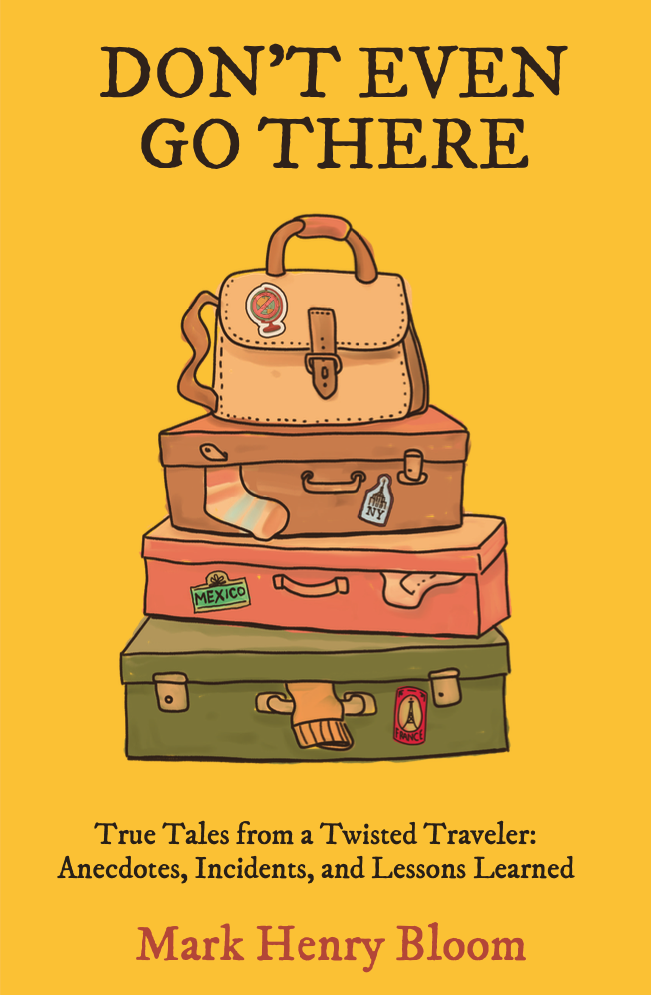
This is a travel story that would have gone into the Rubies in the Rough section of the book, a section that’s about remarkable adventures in unexpected places. You see? There are places I can actually recommend. Not many, perhaps, but a few. Read much better stories in the published version of Don’t Even Go There.